Santa Fe Roofing Guide

Independent. Not a roofing contractor.

Santa Fe, New Mexico  ·  revised 2026-08-04

Roof repair in Santa Fe

On most Santa Fe homes a leak starts at a canale, a parapet junction, or failed flashing — not in the middle of the roof. The wet spot on your ceiling is often nowhere near the actual entry point.

Get it inspected Read the guide
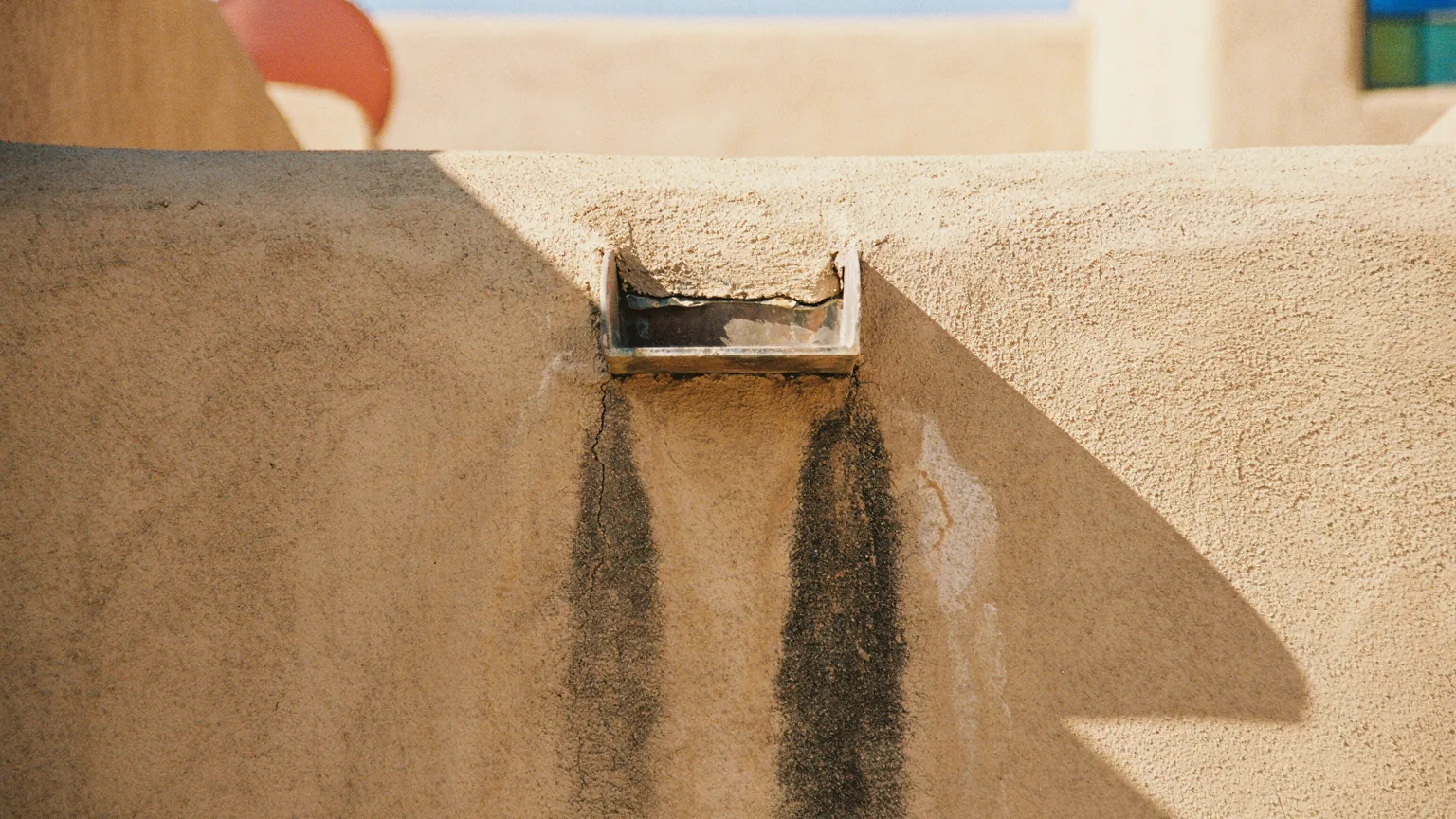
A weathered canale in an adobe parapet wall with water staining on the stucco below it.
Water staining below a canale — the most common origin of a Santa Fe flat-roof leak.

How a Santa Fe roof actually fails.

Plates — drawn, not photographed.

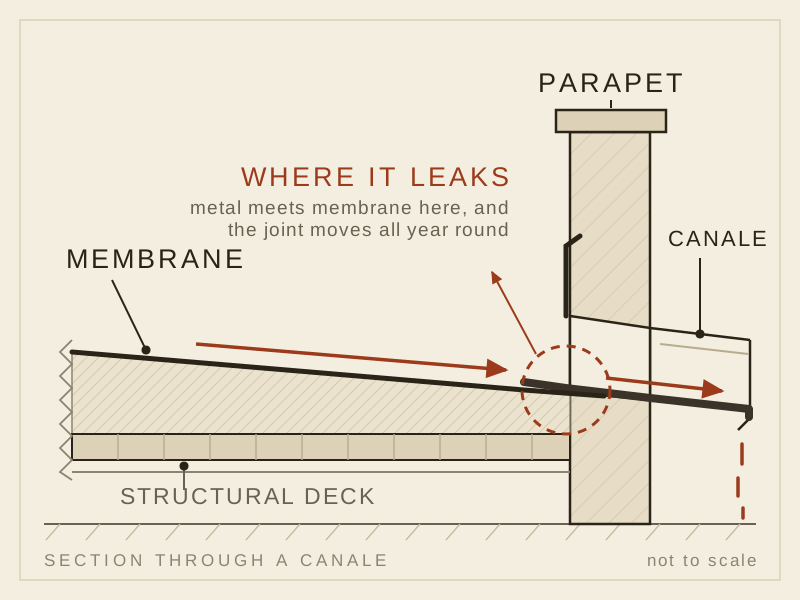
Cutaway illustration of a canale passing through a parapet wall, showing the membrane and flashing joint.
Fig. 1 — A canale in section. The joint where metal meets membrane is where it fails.
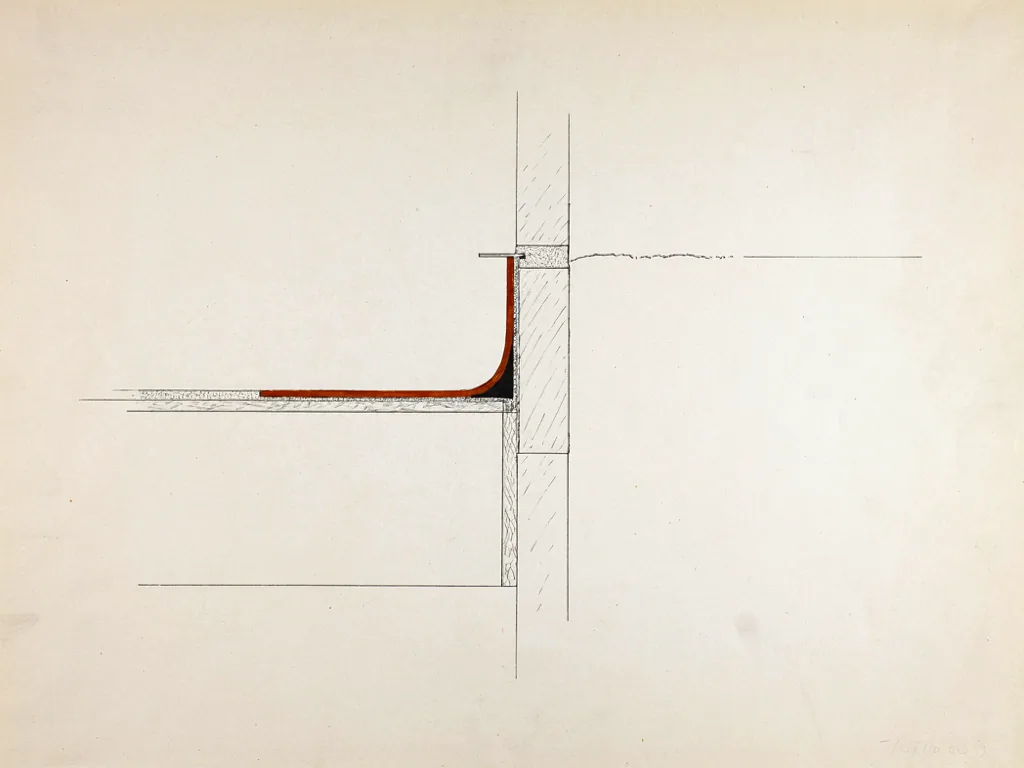
Cross-section of a flat roof membrane turning up a parapet wall to its termination.
Fig. 2 — Where the roof turns up into the parapet — the junction stucco and roofing share.
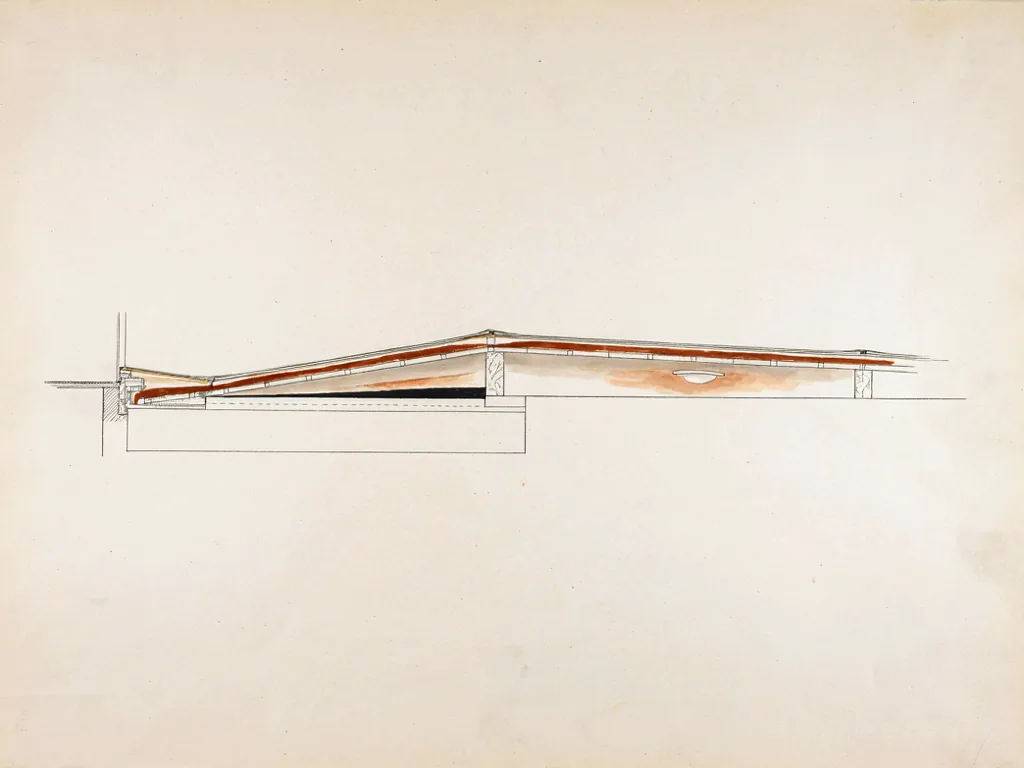
Cutaway showing water entering a roof at one point and appearing inside some distance away.
Fig. 3 — Why the wet spot on your ceiling is rarely under the actual leak.

Canales first

The through-parapet scuppers are the most common origin of a leak on an older Santa Fe flat roof, because every drop on the roof is routed through them.

Water travels

The stain inside is frequently several feet from where water is actually getting in — which is why patching the visible spot so often fails.

Photos

Photograph the stain, and note when it drips and how hard it was raining. That timeline is worth more to whoever inspects it — and to an insurer — than the stain alone.

What this site is: an independent guide to hiring roofers in Santa Fe. We are not a roofing contractor and we don't do roofing work. We publish what we can verify and link the sources, then pass requests to licensed local roofers.

Where is it showing up inside?

Water enters at one point and leaves at another, so the stain on your ceiling is a clue rather than an address. Open the line that matches what you're seeing.

A Near an outside wall, or below a canale
The canale is the first suspect. Every drop of water on a flat roof is routed through it, and the joint where metal meets membrane moves with every temperature swing. Photograph the outside of the canale and the wall beneath it, ideally while it's raining.
B Along the line where the ceiling meets an exterior wall
That line is usually the parapet junction — where the roof surface turns up into the wall. Cracked parapet stucco above it feeds water straight in. Photograph the top of the parapet from outside if you can do it safely from the ground or a window.
C Around a skylight, vent, chimney or swamp cooler
Flashing at the penetration. Anything that goes through a roof has a seal around it, and the seal ages faster than the roof does. Photograph the penetration and the stain so an inspector can match them.
D In the middle of a room, away from anything
This is the one that most needs an inspection rather than a guess. Water has travelled along the decking or between layers before finding a way down, so the entry point could be several feet away in any direction. Note the time it drips and how hard it was raining — that timeline narrows it down more than the stain does.

Whichever line matches: don't go up on a low-slope roof in wet or freezing conditions to check. A wet membrane is more slippery than it looks.

Where Santa Fe roofs actually leak

Water on a low-slope roof travels. It enters at a failure point, runs along the decking or between layers, and shows up inside wherever it finds a path down. This is why chasing the stain on the ceiling is usually the wrong move, and why a good repair starts with an inspection rather than a bucket of sealant.

The usual suspects, roughly in order:

Repair or replace?

Nobody can answer this from a photo, but the shape of the decision is consistent:

Points toward repairPoints toward replacement
One identifiable entry pointMultiple leaks in different areas
Roof is mid-life and the surface is soundMembrane is brittle, cracked, or at end of life
Decking underneath is dry and solidSoft or rotted decking
Previous repairs are holdingA history of patch-on-patch repairs

Be skeptical of a contractor who reaches "you need a full replacement" before inspecting, and equally skeptical of one who'll seal any leak for a few hundred dollars without looking at why it's leaking. If a replacement is genuinely recommended, it needs a city permit — see permits.

On prices. We don't publish a price list for Santa Fe roof repair, because an honest range for "a leak" spans an order of magnitude — resealing one canale and rebuilding a parapet junction with rotted decking beneath it are not the same job. Anyone quoting a firm number before seeing the roof is guessing, and the guess will be revised.

Canale and flashing work sits inside a roofer's licence, not a handyman's. GS-21 covers roof systems plus the flashing, roof coatings, gutters and downspouts — which is precisely where these leaks start. So an offer to “just seal that up” from someone not licensed for roofing is a scope problem before it is a quality one. The scope, in the rule's own words.

What to do while you wait

If it's actively leaking: catch the water, move what can be damaged, and photograph everything — where it's dripping, when, and how hard it was raining. That timeline is genuinely useful to whoever inspects it, and to your insurer if a claim follows. Don't go on the roof yourself in wet or freezing conditions; a low-slope roof with a wet membrane is more slippery than it looks.

If that's not the shape of it

The crack is on a parapet or a wall Then it may be a stucco repair that presents as a roof leak. There's a three-check triage for that. Stucco repair → It's patch on patch by now A history of repairs that keep failing is the clearest signal you're pricing a replacement, not a fix. Comparing roofers → Someone has already quoted you Verify the licence and find out whether the work needs a permit before you agree to anything. Permits & licensing →

Common questions

+

Why is my ceiling wet far from where the roof leaks?

Because water travels along the decking or between roof layers before it finds a way down. On a low-slope roof the entry point is often several feet from the interior stain, which is why an inspection beats patching the visible spot.
+

What is a canale and why does it leak?

A canale is the scupper that drains water out through a parapet wall on a flat roof. It leaks because it's the collection point for all the water on the roof and because the metal-to-membrane joint moves constantly with temperature.
+

Can I just seal a roof leak myself?

You can, and it sometimes buys time. The risk is sealing over the symptom while water keeps entering elsewhere and rots the decking out of sight. If the leak returns after a patch, stop patching and get it inspected.
+

Do I need a permit for a roof repair in Santa Fe?

A full re-roof requires a City of Santa Fe permit (City of Santa Fe Building Permits). Smaller repairs may not. Ask the contractor to tell you which category your job falls into, and confirm they're pulling the permit if it needs one.

Get someone up there to find it.

Tell us what you're seeing and where. It goes to local licensed roofers who diagnose leaks rather than quote a replacement sight unseen.

  • Free, and you're never obligated to hire anyone.
  • Licensed New Mexico contractors only.
  • Say if it's actively leaking — that changes who can come out and how fast.

We're a guide, not a roofing contractor. We don't do the work — we point you to New Mexico roofers licensed to do it.

Prefer to talk? Call (505) 499-5915 — leave a message and a licensed roofing contractor calls you back.