Where are you in it?
A roof claim runs the same five stages every time, and each one has a different thing worth getting right. Open the stage you're at.
01You've seen damage and haven't rung the insurer yet
02You want to ask whether it's even covered
03The adjuster is coming out
04You've got a number and it looks low
05They've denied it, or they've gone quiet
One thing to hold on to
Your insurer pays for the loss; your roofer does the work; the two are separate decisions. A contractor telling you they'll “handle the whole claim” may be doing you a favour or may be positioning to take the settlement and control the scope. You are allowed to pick the roofer, and you are allowed to get a second bid after the adjuster's number arrives.
The 2025 change, in plain terms
New Mexico's Unfair Claims Practices law, Section 59A-16-20 NMSA 1978, was amended in 2025. A new Subsection P makes it a prohibited unfair claims practice to be:
“treating an insured's inquiry relating to damage or loss as a claim when the facts of the inquiry are not covered in the policy, the insurer makes no payment to or on behalf of the insured and the claim does not involve deceptive practices on the part of the insured”
The Superintendent of Insurance issued Bulletin 2025-010 on 21 October 2025 to explain why it was needed. In the Superintendent's account, insurers had been treating a property applicant's zero-payment inquiry as a prior loss during the application process — so asking a question could count against you later, even though nothing was ever paid and nothing was ever covered. The bulletin states the prohibition applies to applicants as well as existing policyholders.
What that means on a roof: you are entitled to ring up and ask whether something would be covered. If the answer is that it isn't, and no money changes hands, and you haven't misrepresented anything, that conversation is not supposed to become a claim on your record.
Read the source
This is not legal advice and we're not your insurer. The law is quoted above and linked to its source so you can read it yourself and take it to them. If an insurer tells you otherwise, the Office of Superintendent of Insurance is the body that enforces this — File a complaint with OSI, or ring (505) 827-4601.
Why Santa Fe claims argue about different things
Most roofing-claim advice on the internet is written about steep asphalt shingle roofs, where hail damage is assessed by counting bruises on shingles in a test square. That is not the argument on a low-slope Santa Fe roof.
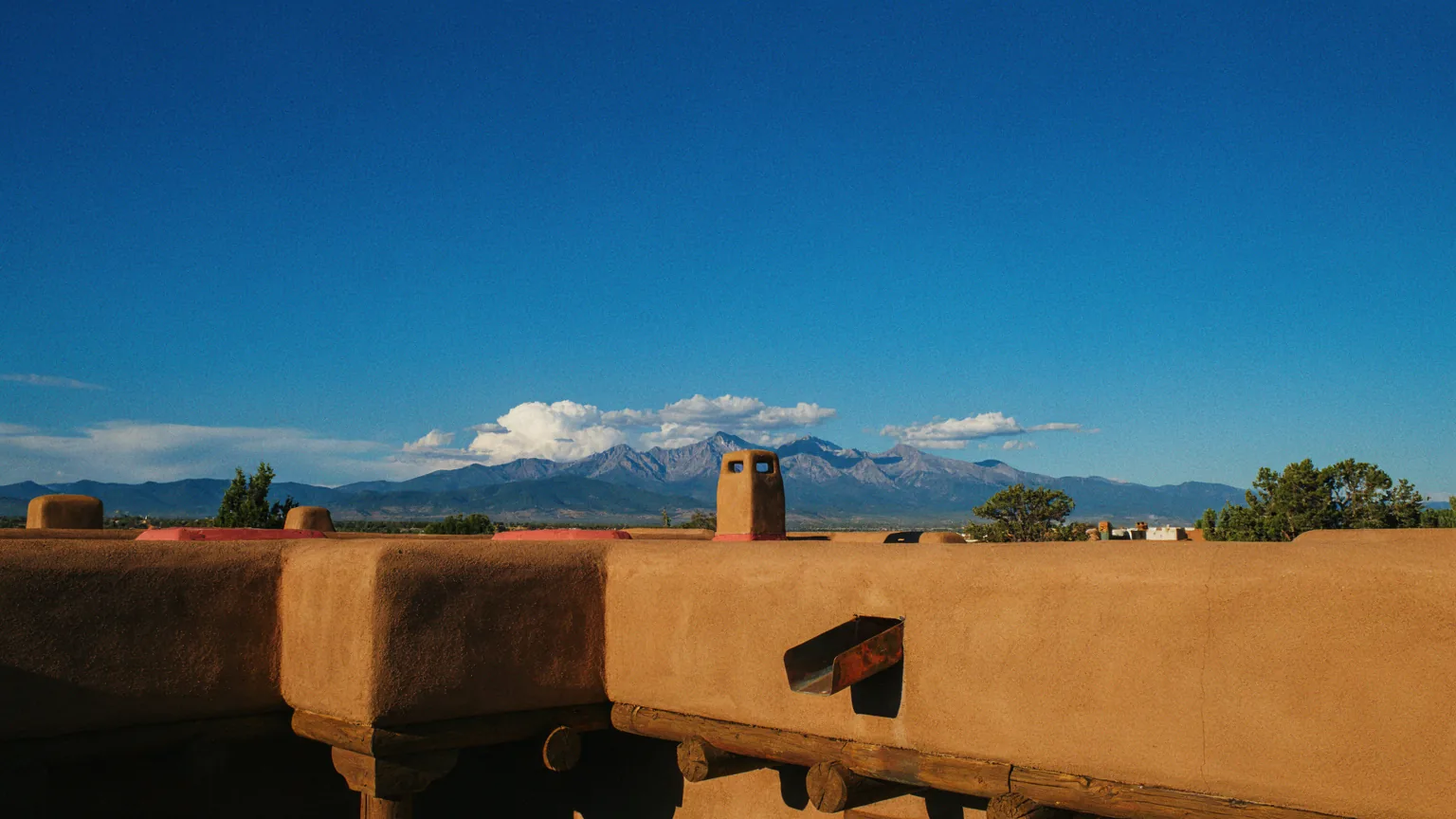
- The damage is often at the details, not the field. Canale metal, flashing, and the parapet junction take the hit, and a scope that only covers the membrane field misses the part that actually leaks. See where Santa Fe roofs leak.
- Stucco and roof are one system on a parapet house, and they are often two line items to an adjuster. If the parapet stucco was damaged, it belongs in the scope — see stucco repair.
- A full re-roof needs a permit. If the settlement funds a replacement, the permit is part of the job, and the forms finder gets you the right one.
- Age and UV. At 7,000 feet a membrane ages faster than its warranty implies, and insurers will reach for depreciation. That's an argument about condition, and photographs taken before the storm are worth a great deal.
The rest of it
A stain inside is rarely under the entry point, and the adjuster's scope should cover the real one.
Roof repair → Check the contractor who knockedStorm work attracts crews who follow the weather. What's public about them, and what isn't.
Checking a contractor → The permit, if it funds a replacementTwo questions and you get the exact City or County form.
Permits & licensing →